Introduction: A Timeless LEGO Kingdom
If there is one theme that defines the soul of LEGO alongside Space, City, and Pirates, it is Castle. For nearly five decades, LEGO Castle has blended imagination with medieval reality, knights and peasants, kings and brigands, wizards and war machines, horses, ghosts, and dragons. Castle is where stories come alive. Where factions collide. Where childhood fantasies of sieges, quests, heroism, and villainy are built brick by brick.
This museum wing explores the entire lineage of LEGO Castle from 1978 to the modern era, maintaining strict historical accuracy, guiding visitors through each faction, innovation, and era-defining set that shaped one of the most beloved themes in LEGO history.
1. The Birth of LEGO Castle (1978–1983)
1.1 The Yellow Castle Era: Where Everything Began
The LEGO Castle theme officially launched in 1978 with one set — a legendary, unmistakable beacon in LEGO history:
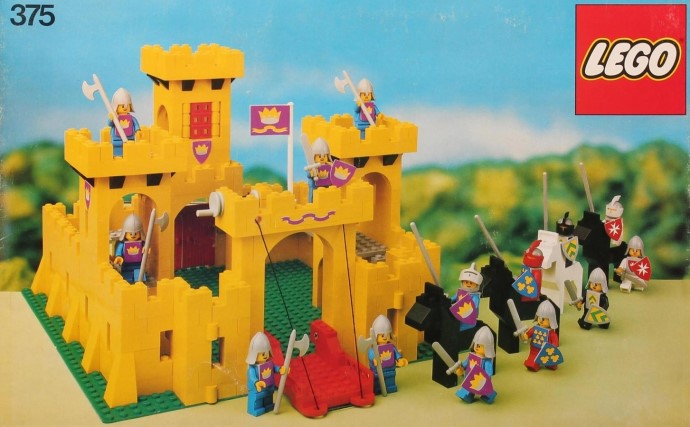
375 / 6075 – The Yellow Castle (1978–1981)
- 767 pieces
- 14 classic minifigures
- Movable gates, modular walls
- Printed torsos before printed faces

The Yellow Castle was innovative in every sense. It introduced:
- The first medieval knights
- The first fully enclosed LEGO fortress
- Modular wall sections that could be rearranged
- Horses made from bricks (moulded horses would come later)
In the museum, this castle represents the birth of fantasy roleplay in LEGO. Its colour choice—bright yellow—came from moulding limitations at the time; grey was not yet feasible. But its place in history is unquestionable. Without 375, there is no LEGO Castle theme.
Supporting sets of the early era:
- 677 Knight’s Procession (1979)
- 383 Knight’s Tournament (1979)
- 6073 Knight’s Castle (1984) – transitional Black Falcon precursor
These early sets established the DNA:
- Knights
- Horses
- Fortresses
- Siege themes
- Colour-coded factions
Castle was now a full theme. And LEGO had only just begun.
2. The Legendary Grey Castle Era (1984–1987)
This era ushered in one of the most influential changes in LEGO history:
light grey bricks became consistent and mass-produced.
And from that moment came the factions that would define an entire generation.
The Grey Castle Era – Lion Knights & Black Falcons (1984–1987)
2.1 The Black Falcons
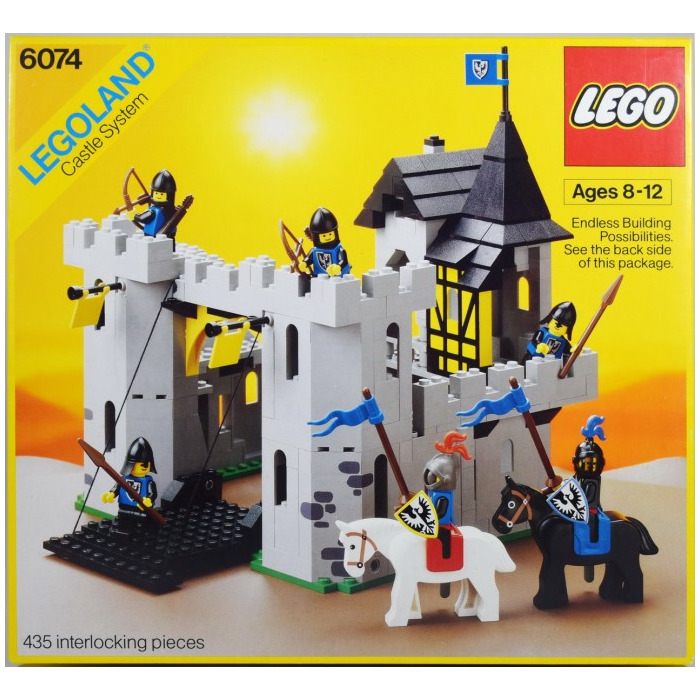
6074 Black Falcon’s Fortress (1986)
A towering asymmetrical castle in proper grey stone. Beloved by AFOLs for:
- Its realistic medieval design
- The introduction of moulded horses (1984)
- The iconic Black Falcon crest
Other Black Falcon highlights:
- 6054 Forestmen’s Hideout (1988) (introduced Forestmen but included Falcon soldiers)
- 6073 Knight’s Castle (1984)
Black Falcons remain a favourite because of their clean heraldic style—blue and black—timeless and highly collectible.
2.2 The Lion Knights / Crusaders
The counterpart to the Falcons, often mistaken for “Crusaders” (a fan name; LEGO called them Lion Knights).
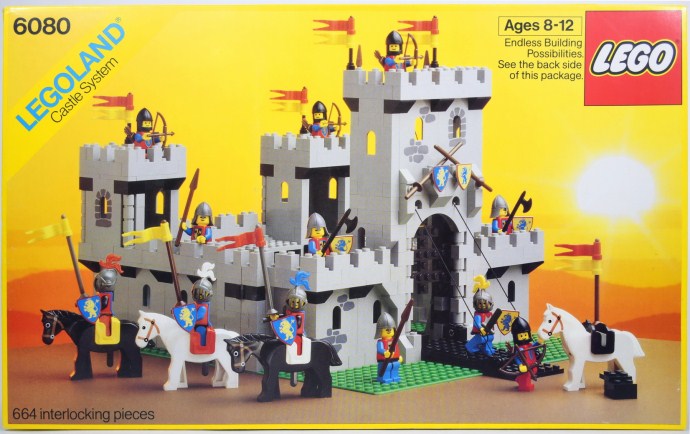
Must-have set:
6080 King’s Castle (1984)
- Four large corner towers
- Portcullis
- 12 minifigures
- Moulded horses
- A true medieval-style keep
This castle became the definitive childhood fortress for the 1980s. For many, it is the castle that ignited a lifelong LEGO passion.

Other notable sets:
- 6067 Guarded Inn (1986) – a classic civilian-building crossover
- 6039 Twin-Arm Launcher (1986)
- 6023 Maiden’s Cart (1986)
These years introduced proper siege engines, modular buildings, and the architecture that would underpin Castle for decades.
3. The Age of Forestmen (1987–1992)
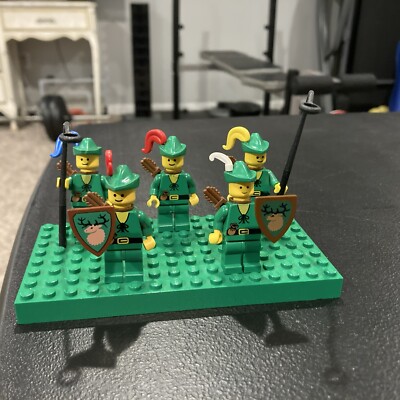
Inspired by Robin Hood, Forestmen brought nature, woodlands, and playfulness to the LEGO medieval world. Often considered by collectors to be the most charming subtheme in LEGO Castle.
Iconic sets include:
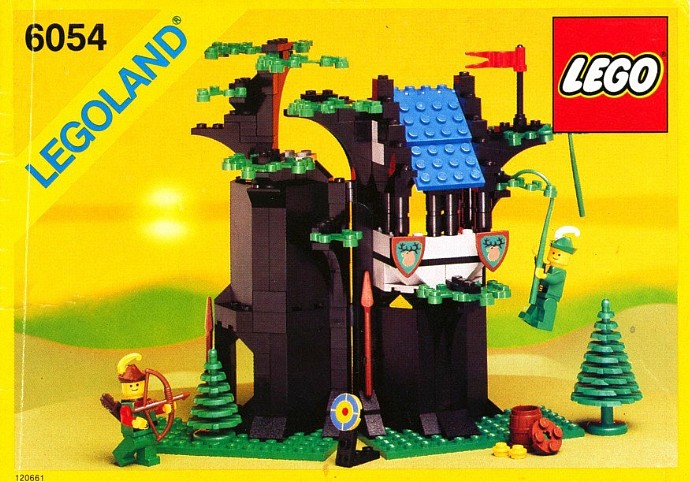
6054 Forestmen’s Hideout (1988)
A perfect tree-base hideout. Compact, strategic, loved.
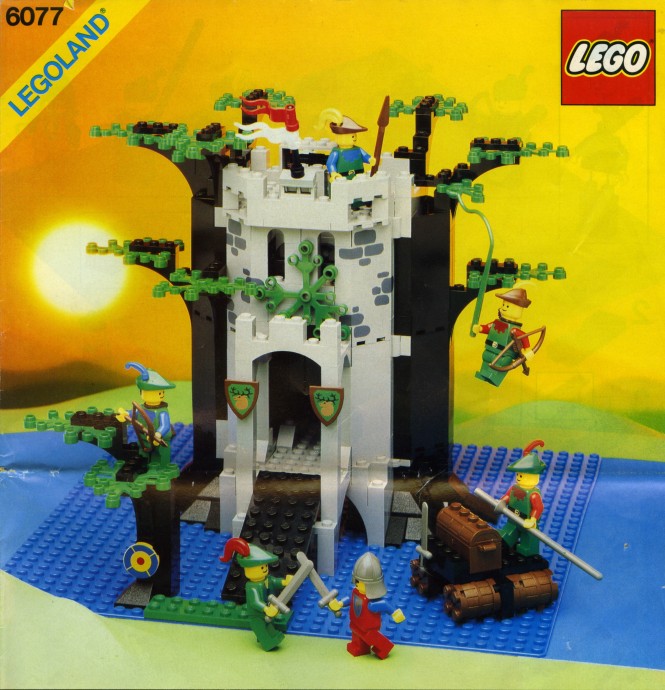
6077 Forestmen’s River Fortress (1989)
- Rivers
- Secret entrances
- Blend of stone, wood, and foliage
6071 Forestmen’s Crossing (1989)
A brilliant, playable bridge set.
Forestmen were colourful, friendly, rebellious, and introduced the idea that Castle wasn’t just armies and battles. It could be a living world.
4. The Black Knights & Dragon Knights Era (1992–1998)
The early 90s marked a shift toward:
- Greater fantasy influence
- Larger dragons
- More elaborate heraldry
- Darker colour schemes
4.1 Black Knights (1992–1994)

Their defining set:
6085 Black Monarch’s Castle (1988–1990)
A foreboding black-and-grey stronghold with:
- Massive double towers
- Modular wall sections
- A drawbridge
- Armoured knights in black and blue
Later replaced by:
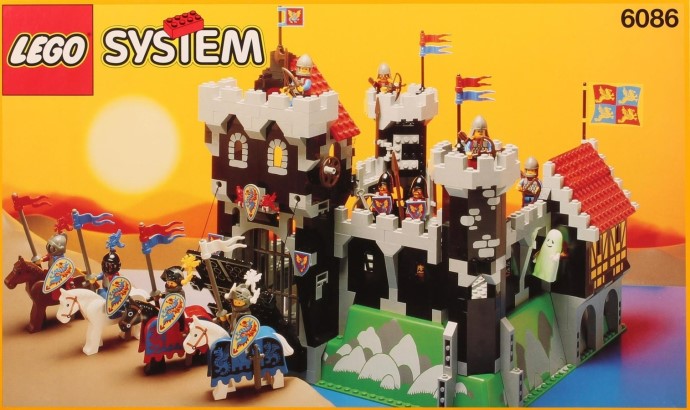
6086 Black Knight’s Castle (1992)
One of the most architecturally detailed castles of the era:
- Rounded towers
- Unique gatehouse
- Black and green colour palette
These sets signalled LEGO’s evolution into more complex building techniques.
4.2 Dragon Masters (1993–1995)
The first real fantasy element arrived:
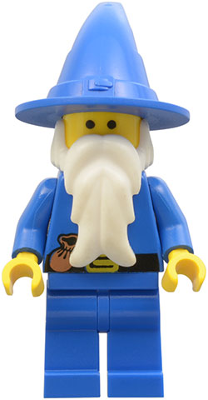
Majisto the Wizard, with his star-covered blue hat.
Essential sets:
- 6082 Fire Breathing Fortress (1993)
- 6037 Witch’s Windship (1993)
- 6020 Magic Shop (1993)
For many children in the 90s, this was the era where magic officially entered LEGO Castle.
5. The Crusader Rebirth and Royal Knights (1994–1998)
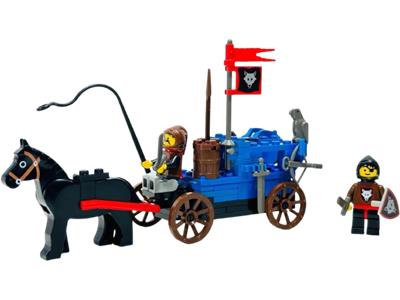
5.1 Wolfpack (1992)
A short-lived but deeply loved faction of bandits.
Key set:
6038 Wolfpack Renegades (1992)
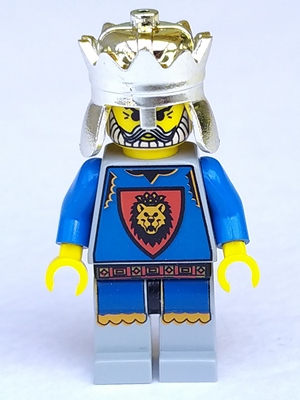
5.2 Royal Knights (1994–1996)
The monarch of this era: King Leo, with chrome-gold swords.

6090 Royal Knight’s Castle (1994)
A monumental structure featuring:
- A massive central keep
- Blue-roofed towers
- The first glow-in-the-dark ghost (introduced earlier but iconic here)
Royal Knights introduced elevated terrain, improved gatehouses, and reinforced LEGO Castle as a premium theme.
6. Fright Knights (1997–1998)
The darkest faction ever introduced, lots of black, red, and bat motifs. Led by Basil the Bat Lord and Willa the Witch.
Key sets:
- 6097 Night Lord’s Castle (1997)
- 2536 Flying Machine (1998)
- 6037 Witch’s Windship (often attributed to Dragon Masters but thematically linked)
This era was divisive among AFOLs but historically significant as LEGO’s first overtly gothic castle theme.
7. The Classic Castle Line Ends (1999–2000)
The late 90s saw Castle pause as LEGO struggled with financial issues and experimental shifts. But something big was coming.
8. The Early 2000s – Knights’ Kingdom & The Resurgence (2000–2006)
8.1 Knights’ Kingdom I (2000)
A short-lived soft reboot with stylised designs.
Notable set:
6098 King Leo’s Castle (2000)
Bright colours and simplified builds meant it did not reach the heights of earlier eras.
8.2 Knights’ Kingdom II (2004–2006)
A radical reinvention, introducing:
- Action-figure style buildable characters
- Unique lore: Jayko, Vladek, Rascus, Santis, etc.
While not traditional Castle, it holds historical value for experimentation.
Bionicle-style builds aside, the theme did include classic system castles:
- 8781 Castle of Morcia (2004)
- 8777 Vladek’s Dark Fortress (2004)
These remain collectible and important stepping stones to the next true renaissance.
9. The Golden Renaissance: Castle (2007–2009)
Castle returned to its roots in 2007 and delivered some of the finest medieval sets in LEGO history.
9.1 The Crown Knights vs Skeleton Army
A perfect mix of classic medieval and light fantasy.

Must-have icons:
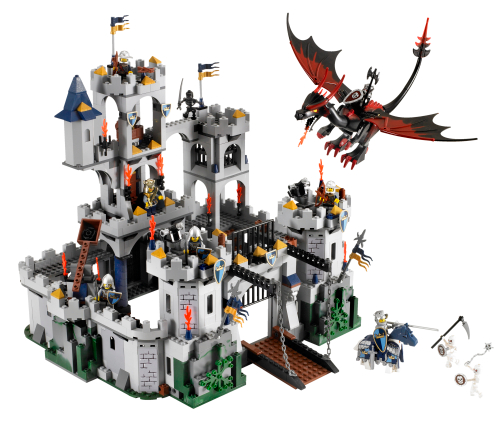
7094 King’s Castle Siege (2007)
- One of the best large castles LEGO ever produced
- Full interior
- Extensive siege accessories
7036 Dwarves’ Mine (2007)
A beloved unique set introducing dwarves and mine systems.

7037 Tower Raid (2007)
A perfect mid-scale attack set.
This era introduced trolls, skeleton factions, and dwarven architecture, balancing medieval realism with accessible fantasy.
10. The Kingdoms Era (2010–2012)
A fan favourite, seen as a spiritual successor to 1980s Lion Knights and Black Falcons.
Main factions:
- Red Lion Kingdom
- Green Dragon Knights
Highlights:
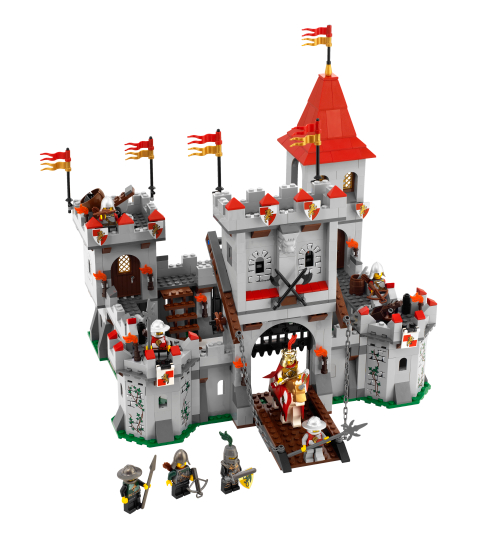
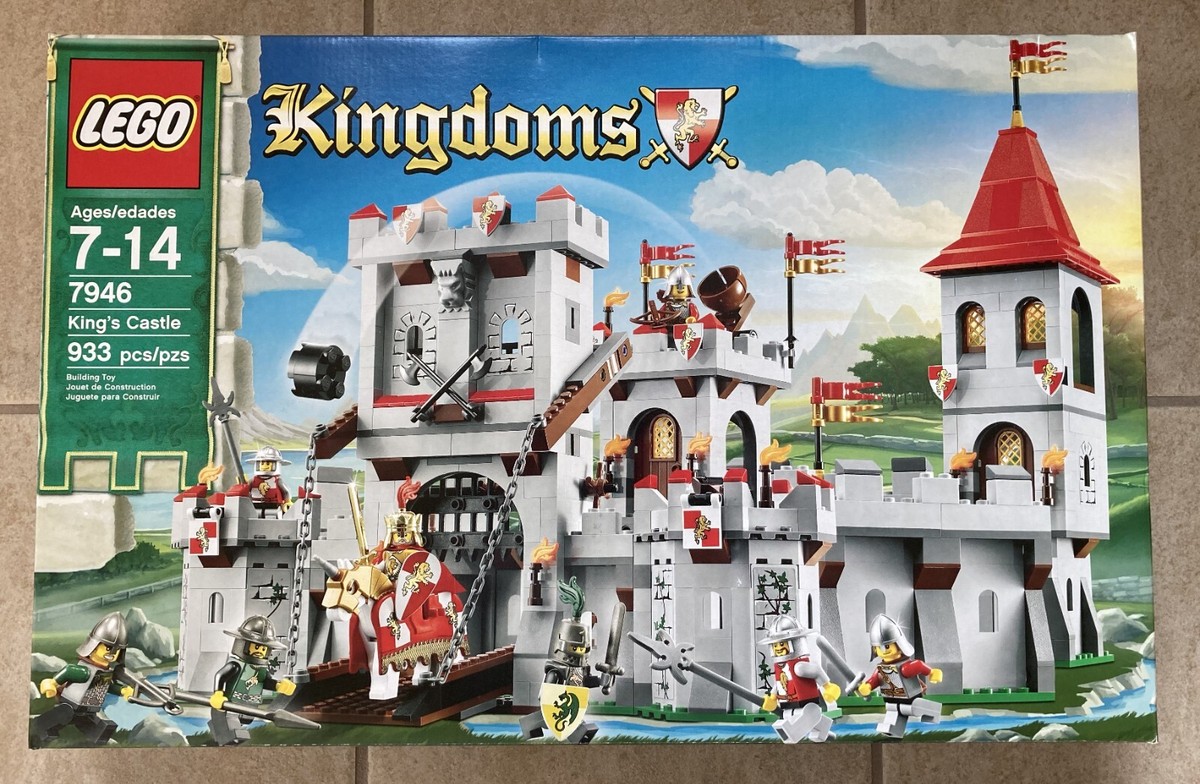
7946 King’s Castle (2010)
A refined, modular, return-to-classic design.
7187 Escape from Dragon’s Prison (2011)
A brilliant siege/escape set with gritty realism.
10223 Kingdoms Joust (2012)
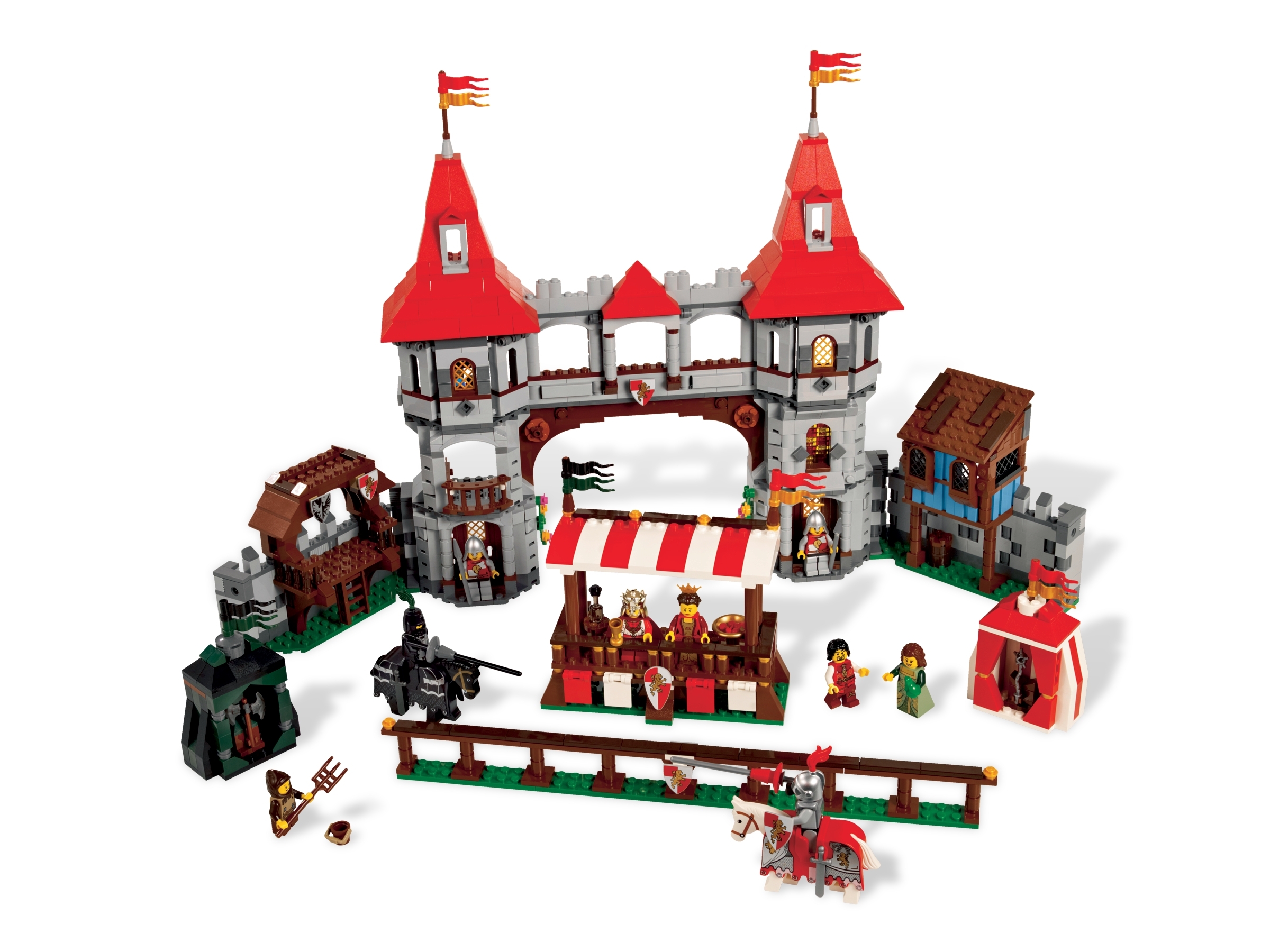
The absolute crown jewel of this era.
- Highly detailed medieval architecture
- Most realistic civilian medieval building ever produced
- Spectacular minifigures
- Often considered one of the top 3 Castle sets of all time
Kingdoms appealed to AFOLs for its realism, lack of cartoonishness, and focus on medieval life rather than magic.
11. LEGO Castle (2013)
A short-lived but solid wave that introduced more colourful designs.
The must-have set:
70404 King’s Castle (2013), the last “traditional” castle until 2021.
12. Nexo Knights (2016–2018)
A bold experiment merging Castle with sci-fi.
Notable sets:
- 70317 Fortrex (2016) – a mobile castle tank
- 70352 Jestro’s Volcano Lair (2016)
While divisive among classic Castle fans, Nexo Knights was crucial for:
- Expanding building techniques
- Introducing new shield shapes
- Modernising the medieval aesthetic for younger builders
And its failure set the stage for the triumphant return to classicism.
13. The Modern Age & The Return to Heritage (2021–Present)
Beginning in 2021, LEGO acknowledged the desire for nostalgic, premium Castle experiences.
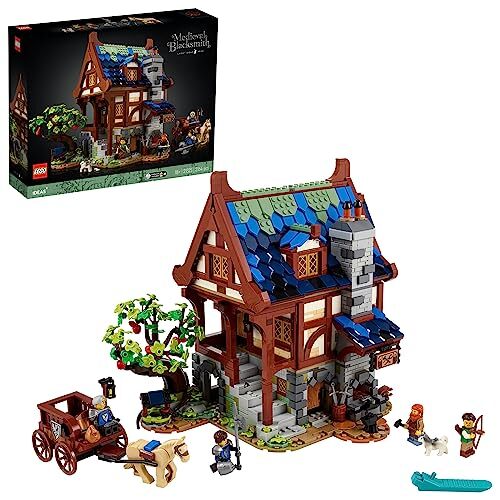
13.1 LEGO Ideas: 21325 Medieval Blacksmith (2021)
A masterpiece of AFOL-targeted design.
Features:
- Black Falcons (first official return since the 1990s)
- Realistic medieval architecture
- Hand-forged details, timber framing
This set single-handedly revived global interest in traditional Castle.
13.2 Creator 3-in-1 Castles (2021–2023)
Sets such as:
- 31120 Medieval Castle (2021)
- 31132 Viking Ship & Midgard Serpent (2022) (adjacent theme but medieval in spirit)

These were modular, family-friendly, and helped sustain momentum.
13.3 The 90th Anniversary Triumph: 10305 Lion Knights’ Castle (2022)

This is arguably the greatest Castle set ever produced.
- 4514 pieces
- Massive, museum-grade architecture
- Modern reinterpretation of Lion Knights & Black Falcons
- Two full factions
- A working portcullis
- Full medieval village interiors
- A nod to every era, from Forestmen to Crusaders
It is a centrepiece for Redmond’s Forge LEGO Museum.
13.4 40600 Fall of the Goblin King (2024–2025)
A smaller companion set expanding the modern fantasy lore.
The modern era has fully embraced:
- AFOL nostalgia
- Accurate medieval architecture
- High detail and playability
Castle is once again a flagship theme.
14. Must-Have Sets for a Museum Collection
To deliver a truly complete museum-quality Castle section, these sets represent the definitive milestones:
Foundational Classics
- 375 Yellow Castle (1978)
- 6080 King’s Castle (1984)
- 6074 Black Falcon’s Fortress (1986)
- 6054 Forestmen’s Hideout (1988)
90s Expansion
- 6085 Black Monarch’s Castle (1988)
- 6086 Black Knight’s Castle (1992)
- 6077 Forestmen’s River Fortress (1989)
Fantasy & Renaissance Eras
- 7094 King’s Castle Siege (2007)
- 7036 Dwarves’ Mine (2007)
- 7946 King’s Castle (2010)
- 10223 Kingdoms Joust (2012)
Modern Icons
- 21325 Medieval Blacksmith (2021)
- 31120 Medieval Castle (2021)
- 10305 Lion Knights’ Castle (2022)
A museum with these sets is a museum that tells the full and accurate story of LEGO Castle.
15. The Evolution of LEGO Castle Design
The Castle theme is one of LEGO’s most instructive evolutionary timelines:
15.1 Materials & Colour Palette
- 1978: Yellow bricks
- 1984: Light grey era begins
- 1990s: Emphasis on black, dark grey
- 2000s: Fantasy colours, dark green
- 2020s: Earthy modular accuracy
15.2 Building Techniques
- Early studs-up blocky walls
- Hinged modular sections
- Raised baseplates (90s)
- Advanced SNOT (2000s onward)
- Full architectural realism (2020s)
15.3 Minifigure Evolution
- 1978: Smiley faces
- 1984: New armour and helmets
- 1990s: Visors, plumes, new shields
- 2000s: Skeletons, trolls, dwarves
- 2020s: Dual-moulded legs, printed arms
15.4 Storytelling & Faction Design
- Early years: Simple hero vs villain
- Forestmen: Rogue faction
- 90s: Fantasy darkness
- Kingdoms (2010): Realism
- Modern era: Historical authenticity + character depth
The story of Castle mirrors the story of LEGO itself—constant innovation, nostalgia, and reinvention.
16. Why LEGO Castle Remains So Beloved
Across generations, Castle resonates because it offers:
Timeless Play
Knights, castles, battles, these narratives never age.
Historical grounding
Even the fantasy elements have roots in real medieval structures and traditions.
Faction identity
No LEGO theme aside from Space has created such powerful visual factions.
Architectural beauty
Castles allow intricate design, engineering, and creativity.
Family nostalgia
Every decade has “its” Castle, creating cross-generational bonding.
This makes Castle not just a LEGO theme but a cultural artefact.
Conclusion: A Kingdom Forever Under Construction
LEGO Castle spans nearly 50 years of imagination, history, conflict, architecture, nostalgia, and evolution. From the humble yellow towers of 1978 to the breathtaking 4000-piece Lion Knights’ Castle, Castle has never stopped inspiring builders of all ages.
In the Redmond’s Forge LEGO Museum, the Castle Section stands as a testament to:
- LEGO craftsmanship
- Generational storytelling
- The evolution of the brick
- And the creativity that defines our shared childhoods
As visitors explore this section, guided by iconic sets, faction banners, horses, ghosts, wizards, and kings, they step into a world where the past is rebuilt, reimagined, and revived with every brick placed.
The LEGO Castle story continues.
And here, in this museum, it will stand forever-strong as stone walls, alive as tales told around the fire, and magical as the knights and legends that shaped our dreams.