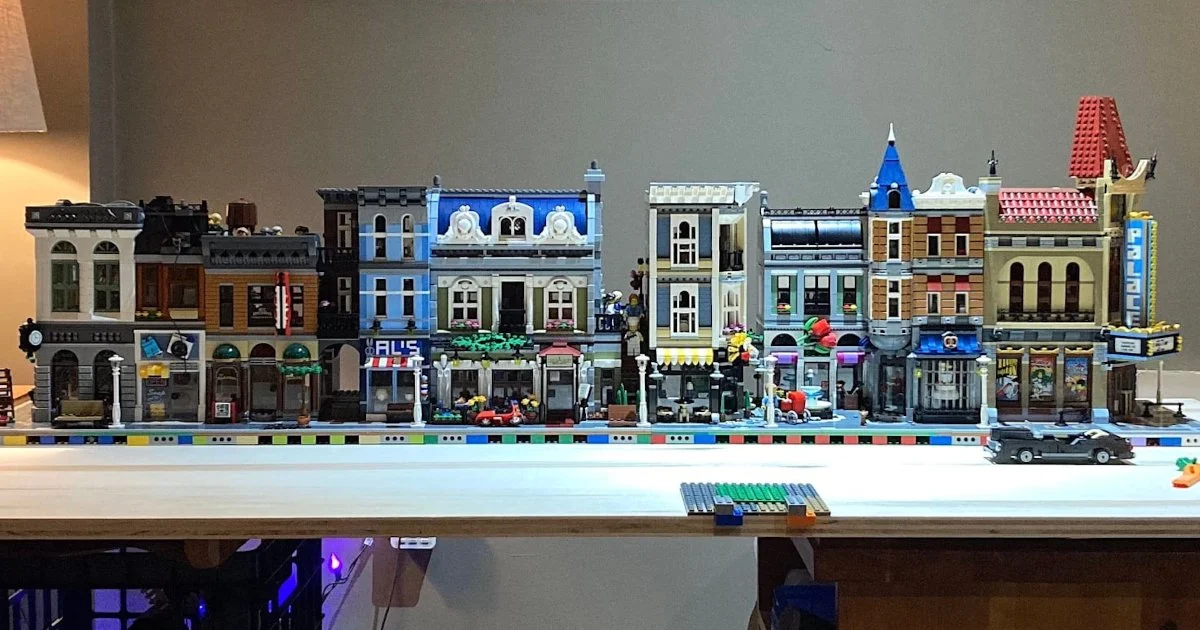
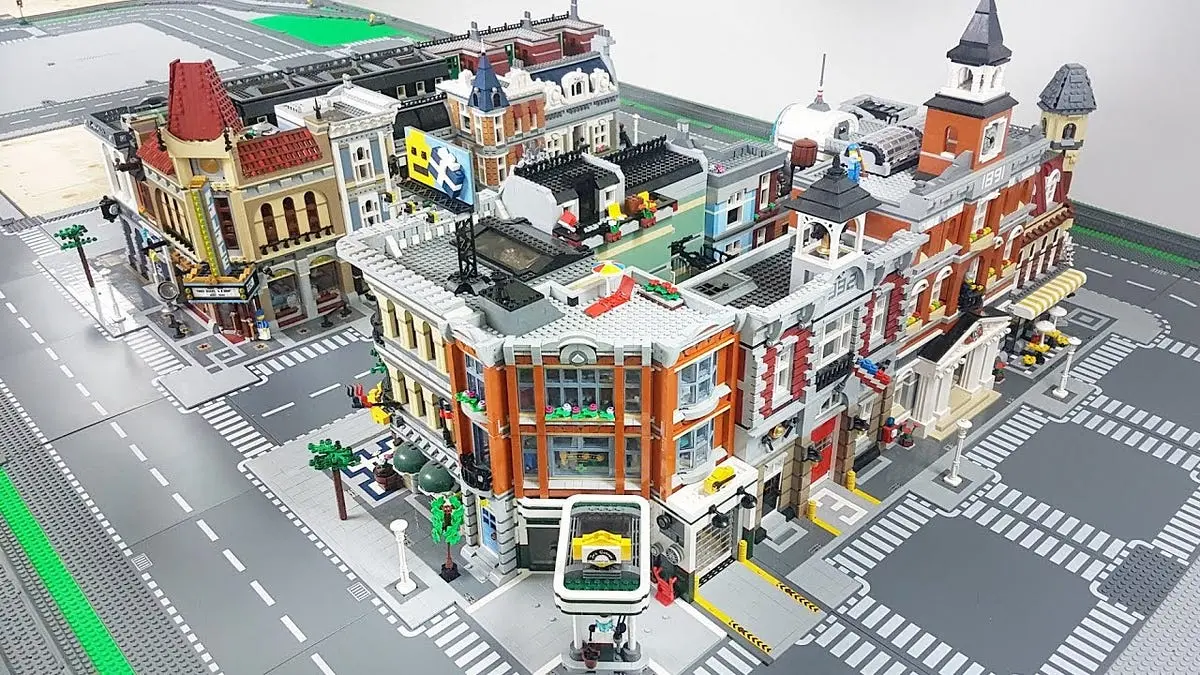
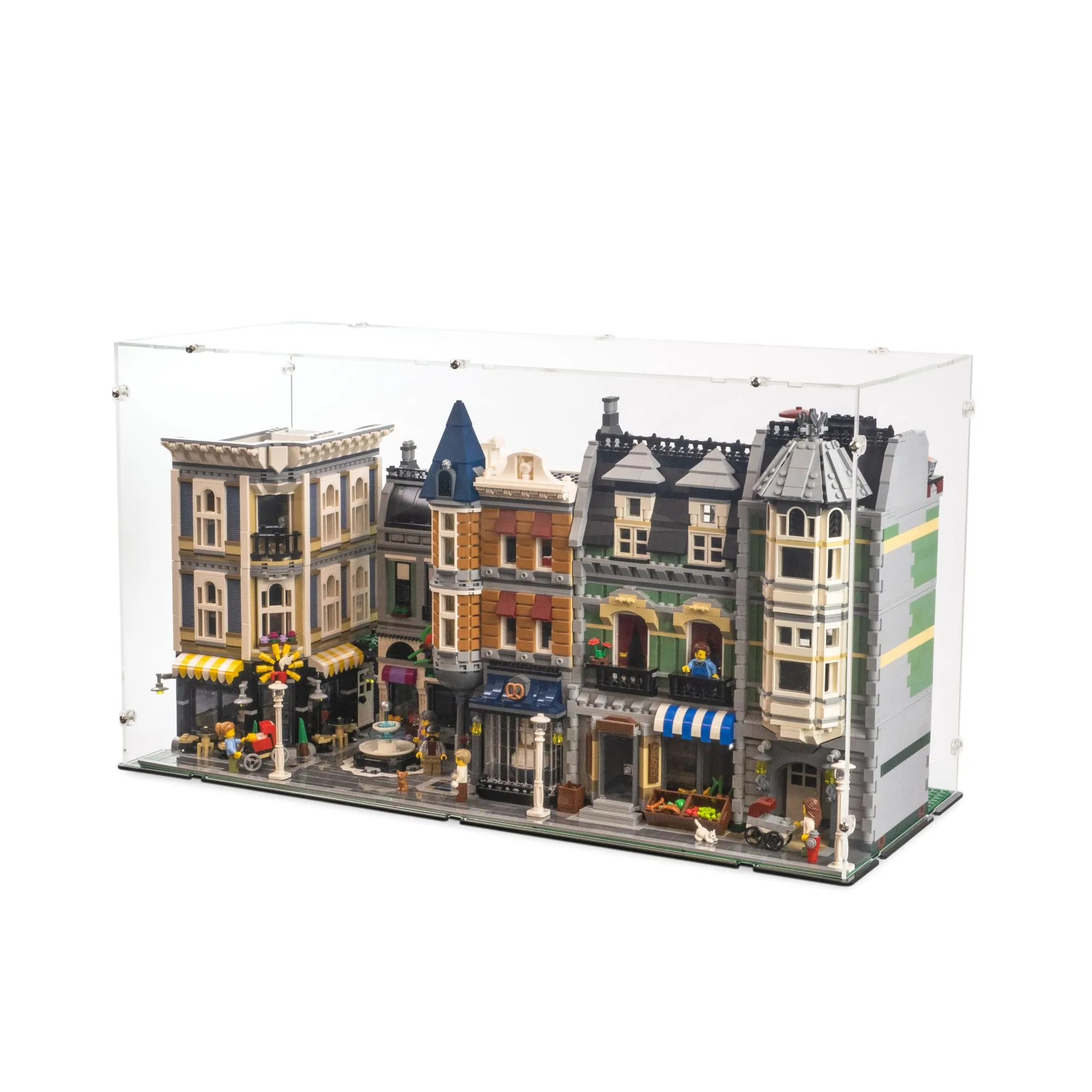
There are sections of Redmond’s Forge that make you smile. There are sections that make you nostalgic. And then there is the LEGO Modular Buildings street, the part of the museum that makes grown adults stop mid-conversation, lean in close to the glass, and whisper: “I had no idea LEGO did this.”
The Modular line is, without exaggeration, one of the most important themes LEGO has ever produced. It represents the moment LEGO stopped being “just toys” and fully embraced the adult collector market. It’s architecture. It’s storytelling. It’s investment. It’s city building at its absolute finest.
And here at Redmond’s Forge, it will form the backbone of our LEGO City district.
The Beginning of Something Iconic
The modular journey began in 2007 with:
Café Corner
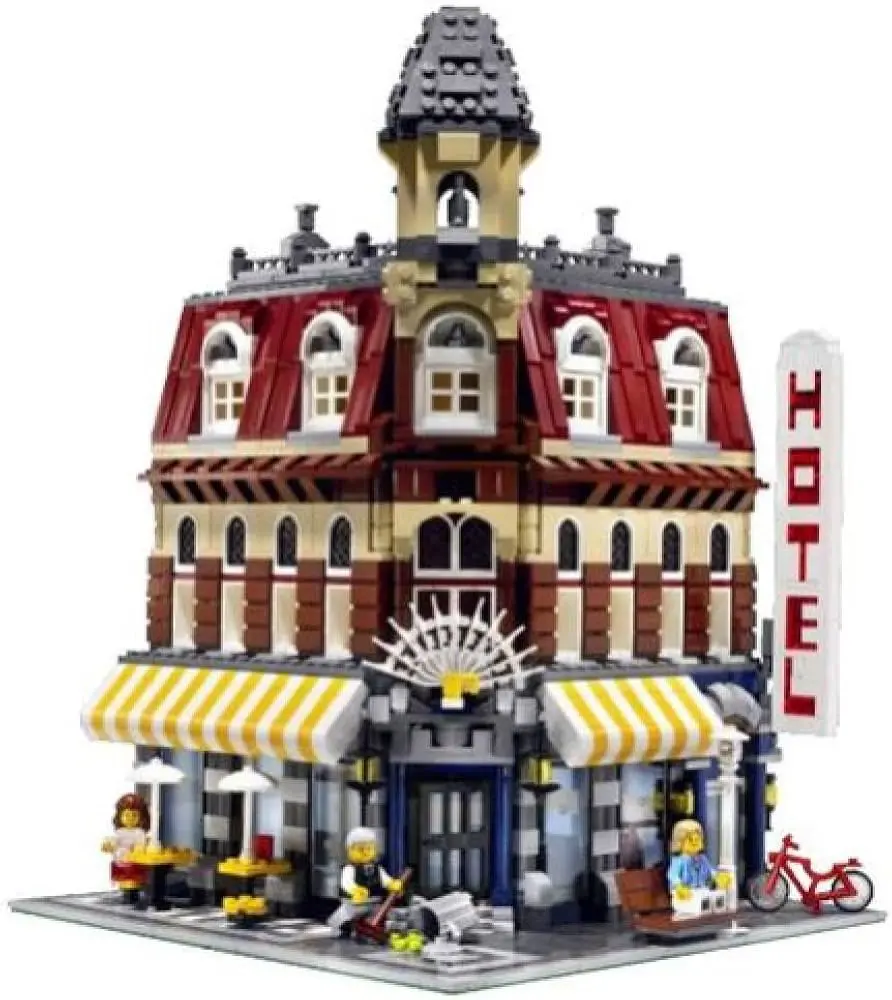
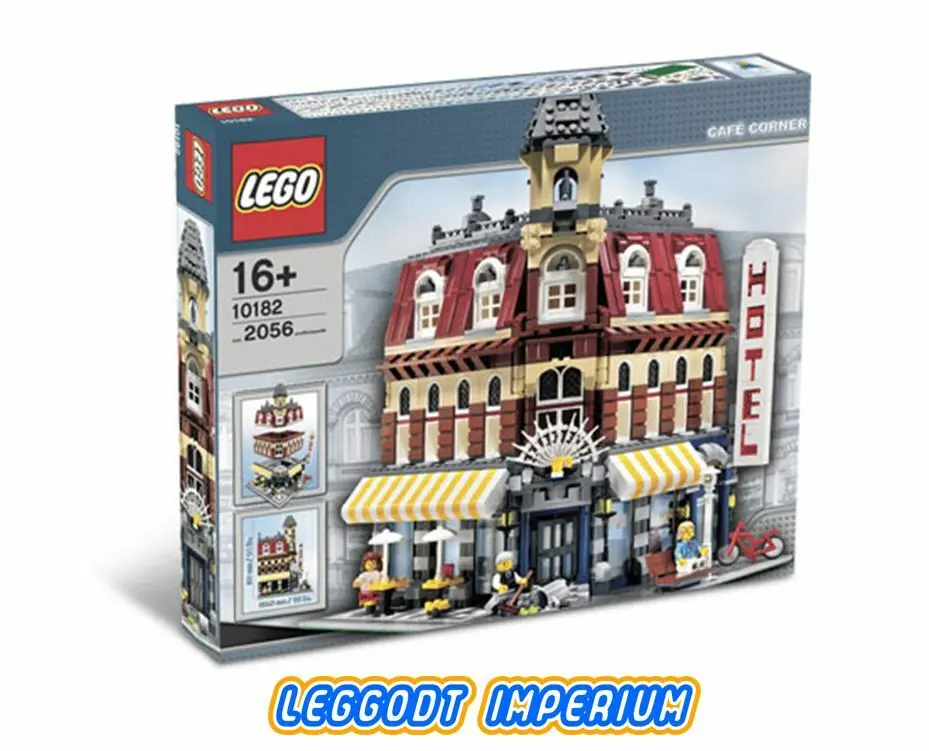
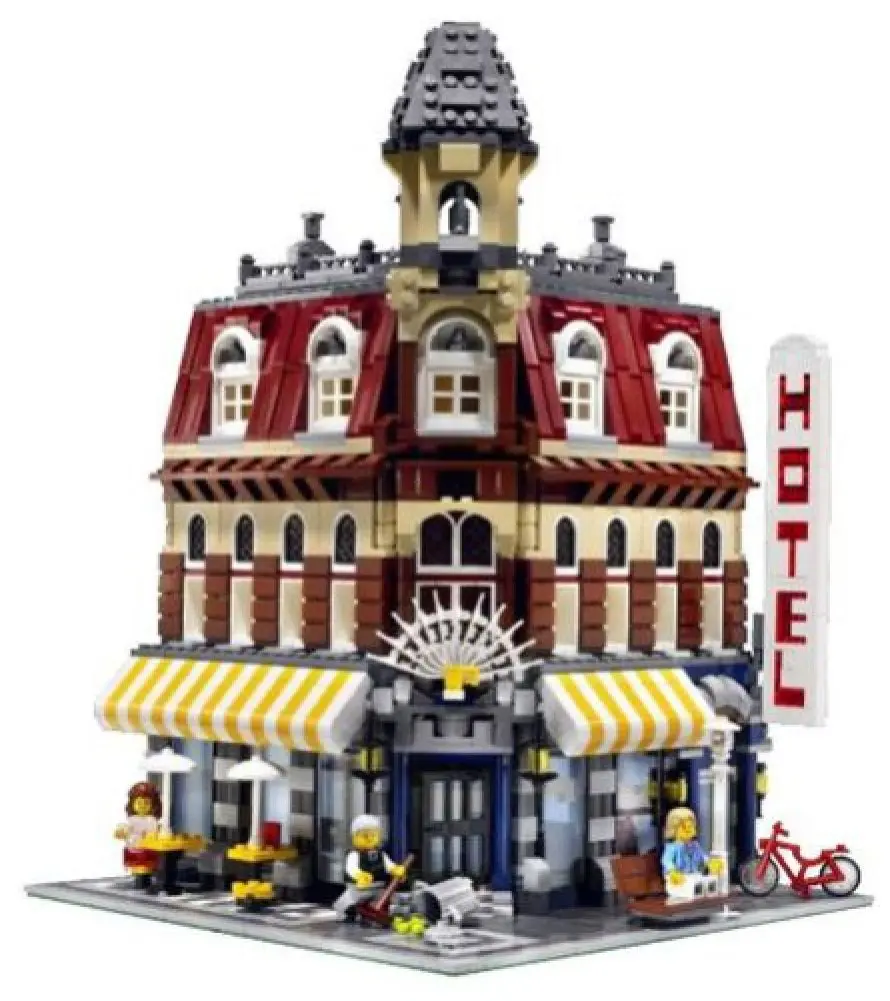
At the time, few realised what LEGO was starting. Café Corner wasn’t overloaded with interior detail by modern standards, but it introduced:
- The 32×32 baseplate format
- The corner building concept
- Advanced building techniques
- A display-first philosophy
It wasn’t just a set. It was a system. From that moment forward, LEGO created an annual ritual: one new building every January, expanding the street one structure at a time. For collectors, that yearly release became something sacred.
The Evolution of the Street
Over nearly two decades, the Modular line evolved dramatically.
Green Grocer
Introduced richer interiors and sand green bricks that would later become legendary (and expensive).
Fire Brigade
Brought Americana architecture and one of the most iconic façades ever produced.
Detective’s Office
Elevated storytelling — hidden clues, secret rooms, narrative woven into structure.
Assembly Square
The 10-year anniversary masterpiece. Larger footprint. Three buildings in one. A love letter to the theme.
Boutique Hotel
A modern architectural pivot, angled geometry, bold colours, advanced techniques.
Each building reflects the era it was designed in. You can trace LEGO’s design philosophy by walking down the street. That’s why in the museum, we don’t just display them. We curate them.
Display Philosophy at Redmond’s Forge
The Modular district is displayed as a continuous city block, built across multiple 32×32 plates, aligned precisely to maintain pavement continuity.
Key display principles:
- Buildings arranged chronologically where possible
- Interiors accessible via removable floors
- Minifigures positioned to tell micro-stories
- Lighting carefully angled to avoid glare on glass
The modulars sit proudly on reinforced IKEA display units, with structural support beneath to prevent baseplate sag, a common long-term issue collectors underestimate.
We treat them like architectural models, not play-sets. Because that’s what they are.
Why Modulars Matter to Collectors
For adult LEGO collectors, modulars represent:
1. Long-Term Investment Stability
Retired modulars historically appreciate strongly, particularly early entries like Café Corner and Green Grocer.
2. Display Impact
Few LEGO themes command shelf presence like a connected modular street.
3. Build Experience
These are 2,000–4,000+ piece builds designed for adults. Complex. Layered. Intentional.
4. Annual Anticipation
Every January release is an event in the LEGO community. Modulars are ritual collecting. Miss one year, and the secondary market reminds you.
Build Experience: A Different Kind of LEGO
Building a modular is fundamentally different from building a Star Wars UCS set. There is no spaceship symmetry. No technic frame skeleton. Instead, you experience:
- Layer-by-layer façade construction
- Brick-built lettering
- Repetitive yet satisfying window placement
- Hidden interior details you won’t see once closed
It’s slow building. Meditative building. At Redmond’s Forge, many of these were built at the dining table, often late at night, the same table where the 75159 Death Star once stood towering during Christmas. Modulars feel like grown-up LEGO.
The Street as a Living System
One of the genius aspects of the modular concept is interconnectivity. Every building connects via Technic pins. This allows:
- Reordering the street
- Expanding endlessly
- Creating corners or straight runs
- Integrating roads, parks, or custom MOCs
In the museum’s long-term city plan, the modular street will eventually:
- Connect to the Daily Bugle skyscraper district
- Flow toward a central plaza
- Integrate a multi-storey car park
- Border the beach and sea MILS plates
Modulars are not isolated buildings. They are infrastructure.
Architectural Accuracy & Influence
Over time, LEGO designers began drawing inspiration from:
- Art Deco
- Parisian corner buildings
- American firehouses
- Jazz clubs
- Boutique European hotels
The Boutique Hotel marked a clear architectural maturity in the line, curved walls, triangular plot footprint, asymmetry used intentionally. Modulars now blur the line between toy and model architecture. And for museum visitors unfamiliar with the theme, this is often the biggest surprise.
Rarity & Market Reality
Early modulars are now difficult to source complete. Collectors face challenges such as:
- Colour-specific brick cracking (notably sand green)
- Missing printed elements
- Sun fade on white façades
- High sealed box premiums
This is why museum curation focuses heavily on:
- Verified completeness
- Proper lighting (no UV damage)
- Stable humidity
- Reinforced shelving
We don’t just display modulars. We preserve them.
Educational Value
The Modular district is also one of the best entry points for explaining:
- LEGO’s shift toward the AFOL (Adult Fan of LEGO) market
- Product lifecycle and retirement strategy
- Secondary market economics
- Design evolution over 18+ years
For visitors considering starting their own collection, modulars are often the gateway theme. One building becomes two. Two becomes a street. A street becomes a city. And suddenly you’re designing museum layouts in Tinahely and Arklow.
The Emotional Factor
Perhaps the most powerful part of the Modular section isn’t monetary value or architectural brilliance. It’s familiarity. These buildings look like places we know:
- The café you had your first date in
- The town hall from your childhood
- The corner shop on your street
- The hotel from a city break
They represent civilisation in miniature. Order. Structure. Community. And in a world that feels increasingly digital, a brick-built street you can physically rearrange has grounding power.
Final Thoughts: The Spine of the Museum
If the Star Wars UCS section is spectacle…
If Castle is nostalgia…
If Harry Potter is magic…
Then LEGO Modulars are structure.
They are the spine of Redmond’s Forge LEGO Museum. They show what happens when LEGO commits to long-term design vision.
They reward patience. They reward consistency. They reward completion.And as the street continues to grow, year by year, so too does the story of the museum itself. One building at a time.
🧱 LEGO Modular Buildings – Price Table (Ordered by Year)
| Year | Set Number | Name | Original RRP | Sealed Price | Second Hand Price |
|---|---|---|---|---|---|
| 2007 | 10182 | Café Corner | $139.99 (~€130) | ~$3,000–$3,500 (~€2,700–€3,200) | ~$800–$1,000 (~€720–€900) |
| 2007 | 10190 | Market Street | $89.99 (~€85) | ~$2,400–$2,800 (~€2,100–€2,500) | ~$600–$800 (~€540–€720) |
| 2008 | 10185 | Green Grocer | $149.99 (~€140) | ~$1,500–$2,000 (~€1,350–€1,800) | ~$700–$900 (~€630–€810) |
| 2009 | 10197 | Fire Brigade | $149.99 (~€140) | ~$600–$800 (~€540–€720) | ~$450–$600 (~€405–€540) |
| 2010 | 10211 | Grand Emporium | $149.99 (~€140) | ~$400–$600 (~€360–€540) | ~$300–$450 (~€270–€405) |
| 2011 | 10218 | Pet Shop | $149.99 (€149.99) | ~$350–$550 (~€315–€495) | ~$250–$400 (~€225–€360) |
| 2012 | 10224 | Town Hall | $199.99 (~€185) | ~$900–$1,100 (~€810–€990) | ~$600–$800 (~€540–€720) |
| 2013 | 10232 | Palace Cinema | $149.99 (€139.99) | ~$300–$500 (~€270–€450) | ~$250–$400 (~€225–€360) |
| 2014 | 10243 | Parisian Restaurant | $159.99 (€149.99) | ~$300–$450 (~€270–€405) | ~$200–$350 (~€180–€315) |
| 2015 | 10246 | Detective’s Office | $159.99 (€149.99) | ~$350–$500 (~€315–€450) | ~$250–$400 (~€225–€360) |
| 2016 | 10251 | Brick Bank | $169.99 (€149.99) | ~$550–$800 (~€495–€720) | ~$350–$550 (~€315–€495) |
| 2017 | 10255 | Assembly Square | $299.99 (€299.99) | ~$400–$650 (~€360–€585) | ~$300–$500 (~€270–€450) |
| 2018 | 10260 | Downtown Diner | $169.99* (€149.99) | ~$350–$550 (~€315–€495) | ~$250–$400 (~€225–€360) |
| 2019 | 10264 | Corner Garage | $199.99* (€179.99) | ~$300–$450 (~€270–€405) | ~$220–$350 (~€198–€315) |
| 2020 | 10270 | Bookshop | $199.99 (€199.99) | ~$300–$500 (~€270–€450) | ~$200–$350 (~€180–€315) |
| 2021 | 10278 | Police Station | $199.99 (€199.99) | ~$300–$500 (~€270–€450) | ~$200–$350 (~€180–€315) |
| 2022 | 10297 | Boutique Hotel | $229.99 (€229.99) | ~$350–$600 (~€315–€540) | ~$250–$450 (~€225–€405) |
| 2023 | 10312 | Jazz Club | $229.99 (€229.99) | ~$300–$450 (~€270–€405) | ~$220–$380 (~€198–€342) |
| 2024 | 10326 | Natural History Museum | $299.99 (€299.99) | ~$350–$600 (~€315–€540) | ~$300–$500 (~€270–€450) |
| 2025 | 10350 | Tudor Corner | $229.99 (€229.99) | New; at RRP (€229.99) | Limited second hand data |
| 2026 | 11371 | Shopping Street | $249.99 (€249.99) | New; at RRP (€249.99) | Limited second hand data |
The Modular Buildings price assessment ordered by year of release. Because exact current sealed and second-hand prices fluctuate frequently (based on listings on collector marketplaces like eBay, PilotBrick, BrickEconomy, Brickset market values and secondary sales), the values below are estimates based on recent data as of early 2026 (all amounts approximate).
For some older modulars there were slight regional RRP variations (e.g., € prices on release). Sealed/used estimates are based on typical recent marketplace listings in USD/EUR. Prices are rounded to relevant collectible tiers.
💡 Notes on Valuation
- Sealed price premiums: Older classic modulars like Café Corner, Market Street, and Green Grocer have appreciated significantly, often reaching 10×–20× their original RRP due to scarcity and collector demand.
- Second-hand variability: Used prices depend heavily on completeness, box/manual condition and local market demand, a set with box + manuals can command 30–50% more than one without.
- Newer sets: Recently released sets (e.g., Tudor Corner) are still within or near original MSRP on the sealed market as supply meets initial demand.
- Market volatility: LEGO secondary values shift seasonally and with collector trends, so these should be treated as indicative guides.