Review: LEGO 17101 Creative Toolbox
Introduction
The LEGO BOOST Creative Toolbox (17101) represents a revolutionary leap forward in LEGO’s exploration of interactive, programmable building experiences. This isn’t just another building set—it’s an entry point into the exciting world of robotics and coding for young builders. With 847 pieces and a retail price of $159.99, this set delivers five distinct robotic models that children can build, program, and bring to life through an intuitive tablet app. With verified community feedback rating it 4.0/5.0 stars from 1 review, the Creative Toolbox has clearly struck a chord with builders looking to blend traditional LEGO construction with cutting-edge technology.
What sets this apart from traditional LEGO sets is its inclusion of advanced electronic components: a Move Hub with Bluetooth connectivity, an Interactive Motor, and a Color & Distance Sensor. These aren’t just decorative elements—they’re the technological heart that transforms static builds into dynamic, responsive creations that can walk, talk, play music, and even manufacture their own mini LEGO models.
The Building Experience
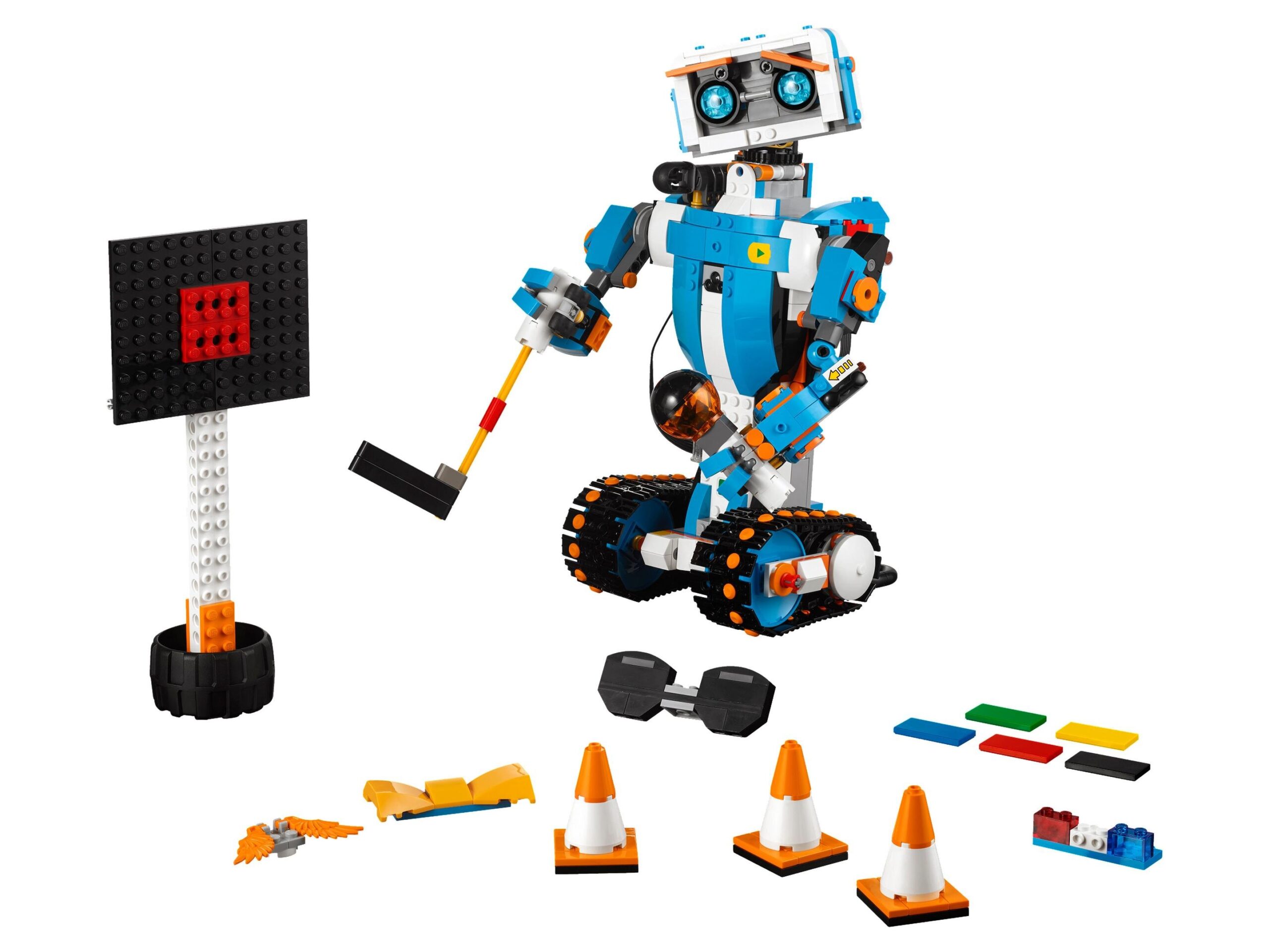
The building journey with the LEGO BOOST Creative Toolbox is unlike any traditional LEGO experience. Rather than following printed instructions, builders download the free LEGO BOOST app to access step-by-step digital building guides for all five models: Vernie the Robot, M.T.R.4 rover, Guitar4000, Frankie the Cat, and the AutoBuilder. This digital-first approach perfectly mirrors the high-tech nature of the builds themselves.
Each of the five models offers a distinctly different construction challenge. Vernie the Robot, standing over 10 inches tall, provides the most substantial build with complex mechanisms for movement and a shoulder-mounted spring-loaded shooter activated by head rotation. The M.T.R.4 rover focuses on modularity with four different tool attachments, while the Guitar4000 stretches to an impressive 16 inches long, requiring precise assembly to achieve proper sound production.
The building process seamlessly integrates the electronic components into each model’s structure. The Move Hub, with its dual encoded motors and internal sensors, must be strategically positioned to enable each creation’s unique functions. This teaches builders to think beyond static construction, considering how electronic components interact with mechanical systems—a valuable STEM learning experience wrapped in the familiar joy of LEGO building.
Technical Review
From a technical standpoint, the Creative Toolbox showcases impressive engineering in both its physical construction and electronic integration. The Move Hub serves as the brain of each creation, featuring Bluetooth Low Energy connectivity, two encoded motors, an activation button, internal tilt sensor, and built-in lighting. This sophisticated piece of hardware maintains LEGO’s legendary build quality while incorporating complex electronics.
The Color & Distance Sensor adds another layer of interactivity, capable of detecting motion, measuring distances, and identifying colors while doubling as a light source. The additional Interactive Motor provides extra mechanical capability for more complex movements. These components integrate seamlessly with traditional LEGO elements, maintaining the system’s fundamental compatibility while expanding its possibilities exponentially.
The structural design of each model demonstrates thoughtful engineering. Vernie’s articulated limbs and rotating head mechanism showcase advanced Technic-style construction techniques. The M.T.R.4’s tool-swapping system requires precise tolerances to ensure smooth operation. Each build teaches different mechanical principles while accommodating the electronic components without compromising structural integrity.
Play Value and Display Potential
The play value of the BOOST Creative Toolbox extends far beyond initial construction. Each of the five models offers unique interactive experiences through the companion app’s icon-based coding interface. Vernie can be programmed to walk, talk, dance, and even express emotions through light and sound. The M.T.R.4 becomes an exploration vehicle that responds to obstacles and completes missions using its various tool attachments.
Perhaps most impressively, the AutoBuilder actually constructs miniature LEGO models autonomously when properly programmed—a jaw-dropping demonstration of what’s possible when LEGO building meets modern robotics. Frankie the Cat responds to feeding with different colored bricks and expresses moods through movement and sound, creating a genuine pet-like interaction. The Guitar4000 transforms into a functional musical instrument with pitch bending and sound effects.
The included playmat enhances the experience by providing specific activity areas for programmed challenges. Display-wise, these aren’t static showpieces—they’re active demonstrations of the builder’s programming skills. The white, orange, and blue color scheme gives all models a cohesive, modern aesthetic that looks fantastic whether in action or at rest.
Value Assessment
At $159.99 for 847 pieces, the Creative Toolbox calculates to approximately $0.19 per piece—slightly above average for LEGO sets but entirely justified by the included electronics. The Move Hub alone represents sophisticated technology typically found in much more expensive robotics kits, making this set remarkably competitive in the educational technology space.
The true value lies in the educational potential and replayability. Unlike traditional sets that provide one-time building satisfaction, the BOOST system offers ongoing engagement through programming activities, challenges, and creative coding projects. The icon-based interface makes coding concepts accessible to the 7-12 age range while providing enough depth for continued learning. Five completely different models from one set multiplies the value proposition significantly.
When compared to standalone robotics kits or coding toys at similar price points, the Creative Toolbox offers superior value by combining LEGO’s unmatched building system with genuine programming education. The ability to rebuild and reprogram creates virtually unlimited replay value, making the initial investment worthwhile for families committed to STEM learning.
Conclusion
The LEGO BOOST Creative Toolbox (17101) successfully bridges the gap between traditional building and modern technology education. With its 4.0/5.0-star community rating reflecting genuine builder satisfaction, this set delivers on its ambitious promises. It’s perfect for tech-curious kids aged 7-12, families interested in introducing coding concepts, and LEGO enthusiasts ready to explore the next evolution of the building experience.
While the $159.99 price point requires consideration, the combination of quality LEGO construction, sophisticated electronics, and extensive educational content justifies the investment. This isn’t just a toy—it’s a comprehensive introduction to robotics, programming, and engineering principles wrapped in the engaging, creative package that only LEGO can deliver.